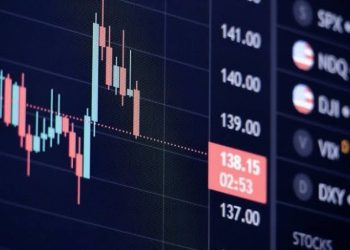

When you make trades, you make them with data on your side and a clear head, using your intelligence to figure out what the best decisions to make are. You should bet the same way. Rather than relying on intuition or gut instinct, use data to make betting decisions and bet the same way that you trade.
If you have been trading or involved in the finance sector for very long, you know that any decisions you make should be driven by data. Your emotions should take the back seat to things like data analysis, probability, risk management and long-term planning. Making choices based on impulses and gut instinct are rarely going to see anywhere near the same return as those that are born from discipline and strategy. These same principles can be applied to betting.
You might think that betting and trading are very different, and they are, it’s true. But some of the same skills can be applied to both, and they share some important characteristics. In both trading and betting, you deal with chance and uncertainty around an outcome; you need to manage how much risk you expose yourself to and both betting and trading can be rewarding if you make disciplined and data-driven decisions, instead of flying by the seat of your pants and letting impulse lead the way.
Let’s take a closer look at the similarities between betting and trading, and how both of them can be more rewarding if approached with a similar mindset.
Probability Can Focus Your Decisions
There is no such thing as a guaranteed win in sports, and no such thing as a certain perfect trading window. What there is, is probable outcomes driven by data, and high risk-to-reward ratios. You should never have the mindset that a trade is guaranteed to play out a certain way, and the same goes for a sports match.
Rather than asking the question “How will this go?” A better question is “What are the odds of this outcome occurring?” Having the mindset that nothing is certain is important to avoid disappointment in both trading and betting, and it allows you to accept losses gracefully.
For many traders and bettors, decisions that are made based on probability are also made with a longer-term goal in mind. The goal isn’t to have this one particular bet or trade come up successful; it’s to be at a net positive after a certain amount of time. Sticking to a probability-focused mindset like this, where success is measured over a series of bets or trades, can be crucial for long-term mental health.
Make Strategic Use of Promotions
Just the same way that an experienced trader will search for all sorts of small ways to reduce their trading costs and improve the efficiency of every dollar, so too can bettors. There are a whole host of different opportunities for bettors to increase the value of their betting positions that are built into the betting industry as methods for platforms to attract and keep customers.
Promotions offering free bets, betting vouchers, and promo codes of all kinds are common. All of these promotions can reduce the amount of money it takes to fully fund a betting account and allow bettors to be more aggressive with their risk-to-reward calculations.
Bettors who use betting vouchers and other promotions intelligently can stretch a bankroll much further than those who don’t. Just like any other tool you have access to, using betting vouchers strategically and with discipline will net better results than simply throwing them away.
Don’t Let Your Emotions Make Your Choices
Getting emotional is as much a danger in betting as it is in trading. If you panic when a market is volatile and make decisions outside of your strategy, you are far more likely to see losses, and the same is true of betting. You might be tempted to always bet on your favorite team or athlete, regardless of what the data or recent form tells you.
Your decisions when trading and betting should always be driven by data, not by emotion. By all means, watch and cheer your favorite team, but don’t put money on them unless the data tells you they have a good chance of winning. Data-driven decisions are by no means a sure thing; there are no guarantees, remember, but they are far more likely to go well than decisions made purely on emotions.
Just the same way that you would use economic reports, earnings data, market sentiment and other trading tools when you trade, you should use recent form, previous match records, injury reports and any other relevant data to make decisions about how you bet.
The Name of the Game is Improvement
When you trade, you are accepting that you always have something new to learn. Old strategies fall out of favor and new information comes to light, causing you to implement new strategies and adapt to how the market is changing. Sports betting should be engaged with in much the same way.
New rules can be introduced, new players enter the sport and old favorites leave, and betting markets themselves can alter and present new opportunities. Accepting that you need to constantly be on your toes and focus on learning what there is to learn will position you to adapt quickly and allow you to make better decisions, rather than being stuck in old ways and making unnecessary mistakes.
Final Thoughts
Betting and trading are separated by a reasonable gulf, but they do share a few things, the most important of which is the mindset that people who are successful at them should have. Making the most out of every dollar, removing emotions from the equation and making choices based on likely probabilities are important for both. There are no guarantees in trading or betting, but making choices based on data is the smart bet.