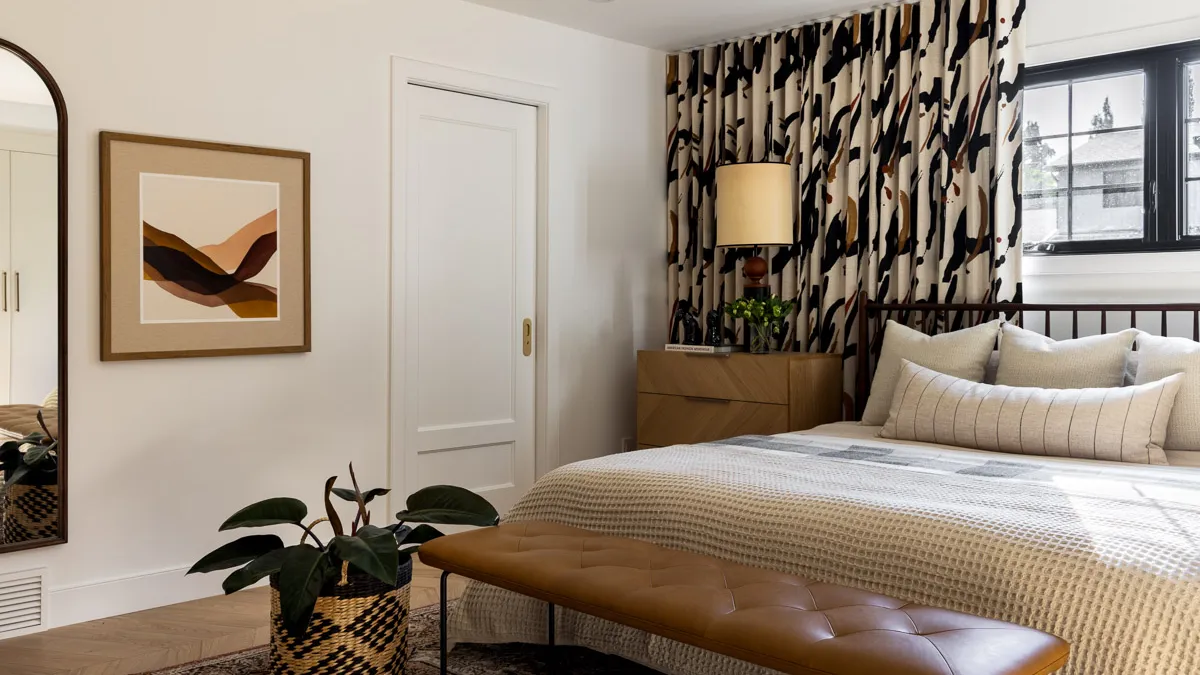

Bedrooms are different from every other room in the house. They aren’t designed to impress guests or host gatherings — they’re meant to feel calm, personal, and restorative. That’s why window treatments matter so much here. They don’t just frame the view; they shape the mood, control the light, and influence how restful the space feels at the end of a long day.
If your bedroom feels slightly unfinished or not quite as cozy as you’d like, the issue may not be the furniture at all. It may be what’s happening, or not happening, at the windows.
Here’s how to get it right.
1. Prioritize Light Control First, Aesthetics Second
Before thinking about fabric or pattern, ask yourself one question: how dark does this room need to be?
Bedrooms benefit from adjustable light. Morning sun can be beautiful, but it’s not always welcome at 6 a.m. That’s where layering becomes important. Pairing drapery with sheer roman shades allows soft daylight to filter in during the day while still giving you the ability to create privacy and darkness when needed.
The key is flexibility. You don’t want a solution that feels all-or-nothing.
2. Let Your Curtains Touch the Floor
This seems simple, but it’s one of the most common mistakes. Curtains that hover awkwardly above the floor make a bedroom feel unfinished and slightly smaller.
Panels should either just graze the floor or puddle slightly if you’re leaning toward a softer, romantic look. Tailored options like custom curtains make this easier because they’re designed specifically for your window height, eliminating the too-short problem that often happens with ready-made panels.
Proportion changes everything. Even in smaller bedrooms.
3. Choose Fabric That Matches the Mood of the Room
Bedrooms call for softness. Linen blends, cotton weaves, and subtle textures tend to feel more relaxed than heavy synthetics.
If you have a minimalist decor style bedroom, something streamlined like gray window roman shades can add warmth without overwhelming the room. Gray works particularly well in bedrooms because it acts as a neutral while still feeling grounded and calming. It supports the palette rather than competing with it.
For more traditional spaces, layered drapery can bring in that cocoon-like effect people crave in sleeping areas.
4. Consider Height to Make the Room Feel Larger
If your bedroom ceilings aren’t particularly tall, window placement becomes even more important.
Mounting hardware a few inches above the window frame (rather than directly at it) draws the eye upward and makes the space feel taller. Vertical details in patterned curtains, especially subtle stripes, can also visually elongate the walls. It’s a small design decision that quietly shifts the proportions of the entire room.
This is especially helpful in primary bedrooms where you want the space to feel expansive, not cramped.
5. Keep the Bed as the Focal Point
Your bed should remain the visual anchor of the room. Window treatments should support it, not compete with it.
If your bedding is detailed or layered, keep your windows more understated. If your bed is minimal, the window is an opportunity to introduce softness or texture. This balance prevents the room from feeling busy.
Structured options like custom roman shades work beautifully when you want polish without excess volume. They sit close to the window and keep the silhouette clean, which works well in smaller bedrooms or rooms with multiple windows.
6. Think About Privacy Beyond Nighttime
Bedrooms often face neighboring homes. Even if you don’t mind light, privacy during the day can be just as important as darkness at night.
Layering sheer materials beneath heavier panels gives you daytime privacy without sacrificing brightness. This is especially useful in suburban settings where homes are close together. A thoughtful combination of shade and drapery ensures you’re not choosing between comfort and natural light.
7. Don’t Ignore Hardware
Hardware often gets treated as an afterthought, but in bedrooms it can quietly elevate the entire look.
Matte black rods feel modern. Brushed brass adds warmth. Wooden rods can introduce an organic note that softens contemporary spaces. Choose something that complements your furniture finishes so the room feels cohesive rather than pieced together.
Even the most beautiful fabric can feel incomplete if the hardware looks generic.
8. Keep Color Palettes Calm
Bedrooms are rarely the best place for high-contrast, high-energy color combinations at the windows.
Soft neutrals, muted blues, warm taupes, and gentle grays tend to work well because they promote rest. If you love patterns, keep it subtle and tonal rather than bold and graphic.
Remember, you’ll see these treatments every morning and every night. They should feel soothing, not stimulating.
9. Consider Energy Efficiency
Bedrooms are often the rooms where temperature fluctuations feel most noticeable. Quality window treatments can help insulate the space, keeping it cooler in summer and warmer in winter.
Heavier drapery panels layered over shades create an additional barrier that improves comfort. While style matters, function plays a significant role in how enjoyable the room feels throughout the year.
10. Make It Feel Personal
Above all, bedroom window treatments should reflect how you live.
If you love sleeping in complete darkness, prioritize that. If you wake up with the sunrise and enjoy morning light, let that guide your choices. If you prefer an airy, hotel-like feel, lean into tailored panels and refined fabrics.
The best bedrooms feel intentional — not overly styled, not neglected, but thoughtfully layered.
Final Thoughts
Bedroom window treatments aren’t just decorative add-ons. They influence sleep quality, privacy, mood, and the overall atmosphere of the space. When proportion, fabric, and light control are considered together, the result feels balanced and effortless.
Whether you prefer the softness of layered sheers or the clean lines of tailored shades, the right choice will make your bedroom feel finished in a way furniture alone never can.