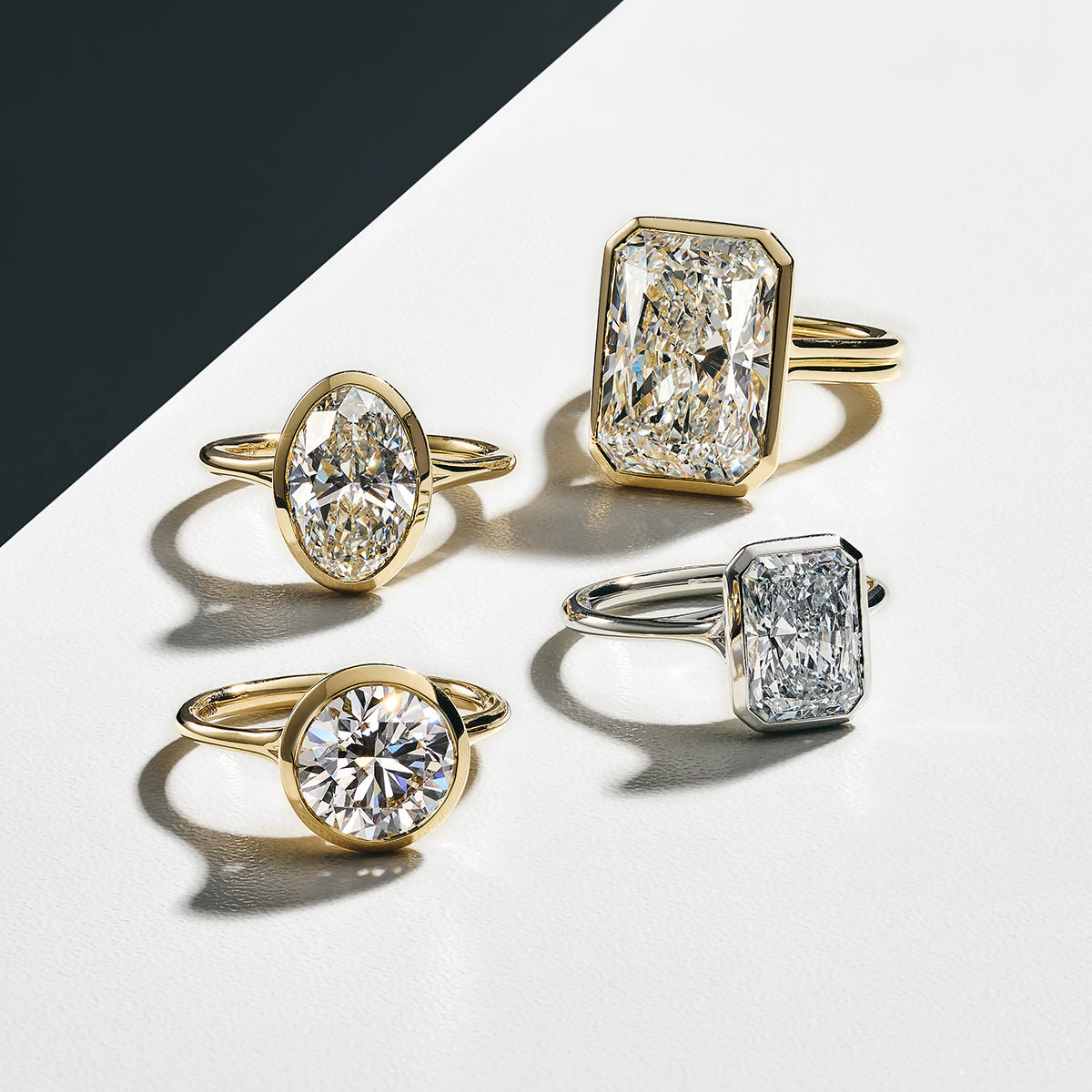

Among the many styles available in today’s bridal market, the bezel engagement ring has gained renewed attention for its balance of structure. Once associated primarily with antique jewelry, the bezel setting has reemerged in modern collections with a distinctly contemporary presence. Its appeal lies not in excess, but in how confidently it frames the diamond.
As preferences shift within engagement rings, more couples are drawn to designs that feel intentional and wearable. The bezel offers both.
What Defines a Bezel Setting
A bezel-set engagement ring surrounds the diamond with a continuous rim of metal, securing it along the edges rather than holding it in place with prongs. This creates a clean outline and a unified silhouette. Instead of exposing the diamond’s sides, the metal follows its shape precisely, resulting in a setting that feels cohesive and architectural.
This construction is one reason bezel settings have remained relevant across generations. The structure is straightforward, yet it requires precision to execute well. The rim must align perfectly with the diamond’s outline, and the proportions must feel balanced rather than heavy.
Security Without Compromise
One of the primary advantages of a bezel setting is security. Because the diamond is encircled by metal, it is less exposed to impact or loosening over time. This makes the design particularly appealing for those who live active lifestyles or prefer a lower-profile ring.
In contrast to more elevated settings, many bezel rings sit closer to the finger. The smooth edge reduces the likelihood of catching on fabric or other surfaces, making it practical for everyday wear. For couples seeking diamond engagement rings that combine refinement with durability, the bezel offers a compelling solution.
Security, however, is only part of the appeal. A well-designed bezel does not sacrifice presence.
A Distinct Visual Identity
The bezel setting creates a defined border around the diamond. This frame can subtly emphasize the stone’s outline, giving round, oval, or emerald shapes a crisp edge. Depending on the metal choice, the rim can either blend seamlessly with the diamond or create a deliberate contrast.
Some designs use a full bezel, while others introduce a partial bezel that leaves portions of the diamond exposed. Each variation shifts the visual language of the ring. The full bezel feels grounded and sculptural. The partial bezel introduces lightness while retaining structure.
Within the broader category of engagement rings, this flexibility allows the bezel to move between minimal and expressive without losing its identity.
Modern Interpretations of a Classic Setting
Today’s bezel rings often reflect a streamlined approach. Clean bands and thoughtful proportions define the modern interpretation. Rather than relying on decorative accents, the focus remains on how the diamond and metal interact.
This is one reason the bezel has become a natural fit for contemporary bridal collections. It aligns with the preference for designs that feel composed rather than embellished.
As interest in alternative settings grows, the bezel engagement ring stands out for offering both clarity and character. It does not compete with the diamond. It frames it with intention.
Where to Explore Bezel Styles
For those exploring bezel settings within fine jewelry, designers that emphasize proportion and craftsmanship offer the most refined options. Collections at Jean Dousset include bezel silhouettes crafted exclusively with lab-grown diamonds. The focus remains on structure, balance, and thoughtful execution.
A bezel set engagement ring is not simply a practical choice. It is a deliberate one. When crafted with precision, it delivers security, presence, and a composed sense of style that continues to resonate within modern engagement rings.